Can India break free from China's rare-earth magnetic grip?
China controls 90%+ of rare-earth magnets, and India's EV industry just felt the squeeze. What these magnets are, how they're made, and India's way out.
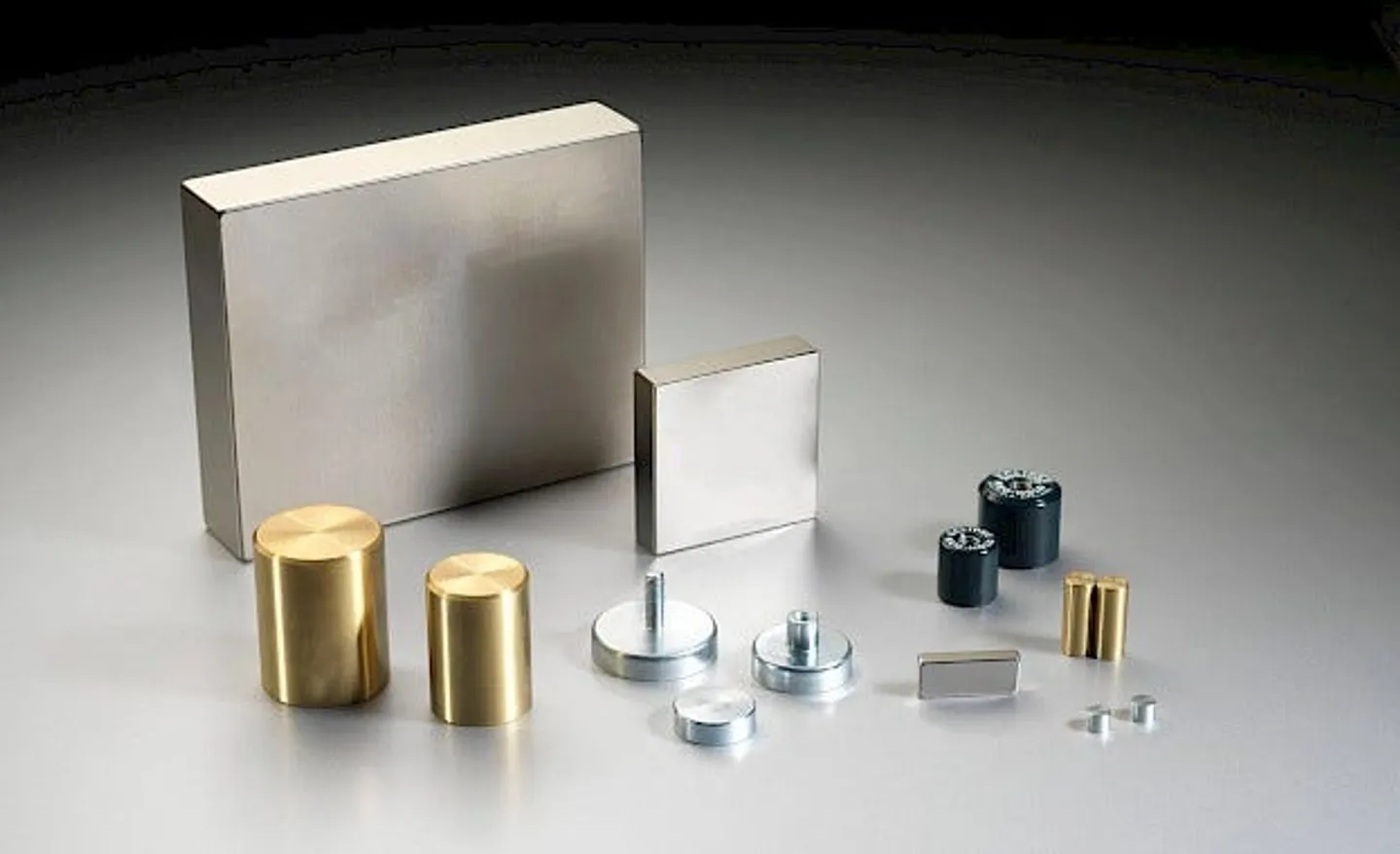
On April 4, China imposed new controls on rare-earth permanent magnet exports, requiring companies worldwide to obtain government licenses. While aimed at the U.S. amid ongoing trade tensions, the move has left countries like India scrambling.
On April 28, Rajiv Bajaj, Managing Director of Bajaj Auto, warned in a Moneycontrol interview that the EV industry could come to a halt if the issue drags on.
Anuj Sethi, Senior Director at CRISIL: “The supply squeeze comes just as the auto sector is preparing for aggressive EV rollouts. Over a dozen new electric models are planned, most built on PMSM platforms. While most automakers have four–six weeks of inventory, prolonged delays could start affecting production, with EV models facing deferrals from July 2025.”
According to CRISIL, by the end of May 2025 nearly 30 import requests from Indian companies had cleared the Indian side — but none had been approved by Chinese authorities, with no shipments delivered as of June 10.
India’s most ambitious manufacturing sector is still tethered to Chinese supply chains.
What is a rare-earth permanent magnet?
In day-to-day life we meet magnets in loudspeakers, refrigerator fittings, and toys. Those are usually ferrite magnets — inexpensive, weaker magnets made from iron oxide and ceramics.
Modern technology needs magnets that are smaller, lighter, and far more powerful. That’s where rare-earth permanent magnets come in — the strongest known magnets, critical for electric vehicles, wind turbines, smartphones, medical equipment, and advanced defense systems.
Their power lies in converting electrical energy into strong mechanical motion. As current flows through copper coils near the magnet, the magnetic field interacts with the current to produce torque. That’s the core principle behind almost every EV motor today — high torque, quick acceleration, and compact design, all enabled by rare-earth magnets.
The most widely used variety is the Neodymium-Iron-Boron (NdFeB) magnet, which relies on a precise blend of rare-earth elements:
- Neodymium (Nd) — provides the core magnetic strength
- Praseodymium (Pr) — enhances efficiency and thermal stability
- Dysprosium (Dy) and Terbium (Tb) — improve performance at high temperatures (inside EV motors, for example)
- Samarium (Sm) — used in Samarium-Cobalt (SmCo) magnets, known for corrosion resistance and stability under extreme heat (aerospace and defense)
Unlike ferrites, rare-earth magnets pack incredible power into tiny sizes — making them indispensable to clean mobility, energy, and smart electronics.
How are they made?
Rare-earth materials aren’t actually “rare” — they’re fairly abundant in the Earth’s crust. What makes them rare is the complex, technically demanding, resource-intensive process required to extract and refine them:
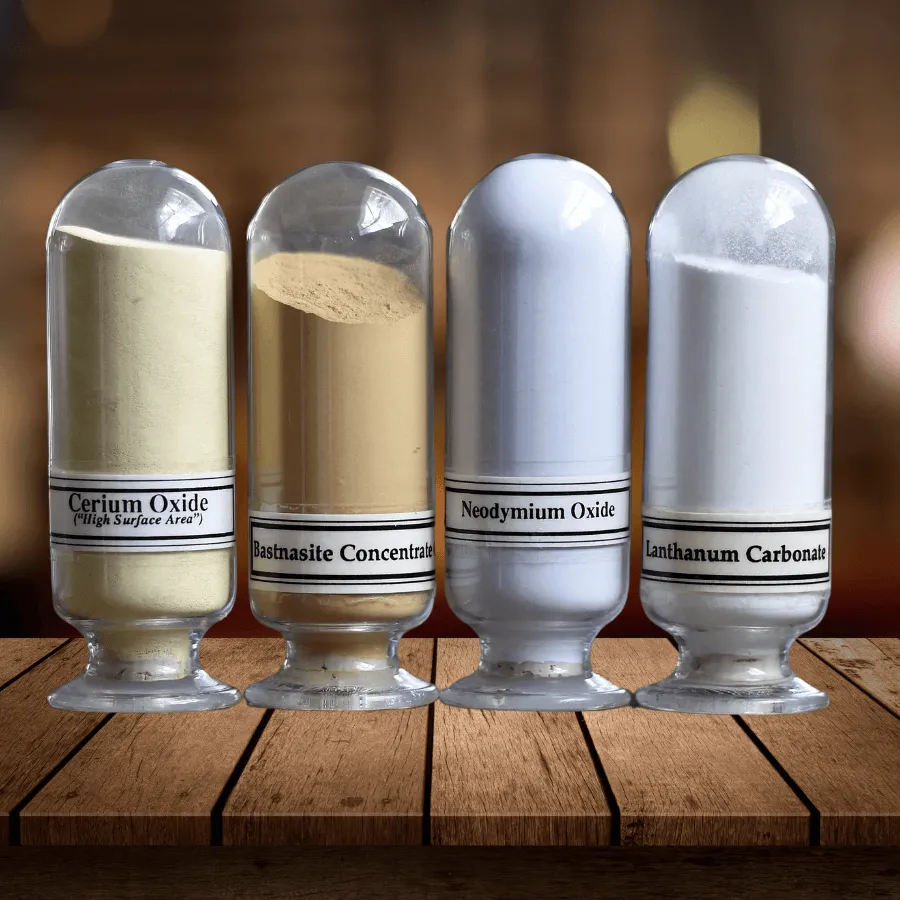
- Mining & extraction of oxides and carbonates. Ores are mined and processed into rare-earth oxides or carbonates — Nd₂O₃, Pr₆O₁₁, and others — then chemically separated and refined to high purity via solvent extraction, an energy- and chemical-intensive step.
-
Metal reduction. The purified oxides are reduced to metallic form via calcium reduction or electrolysis — producing actual neodymium, praseodymium, and so on.
-
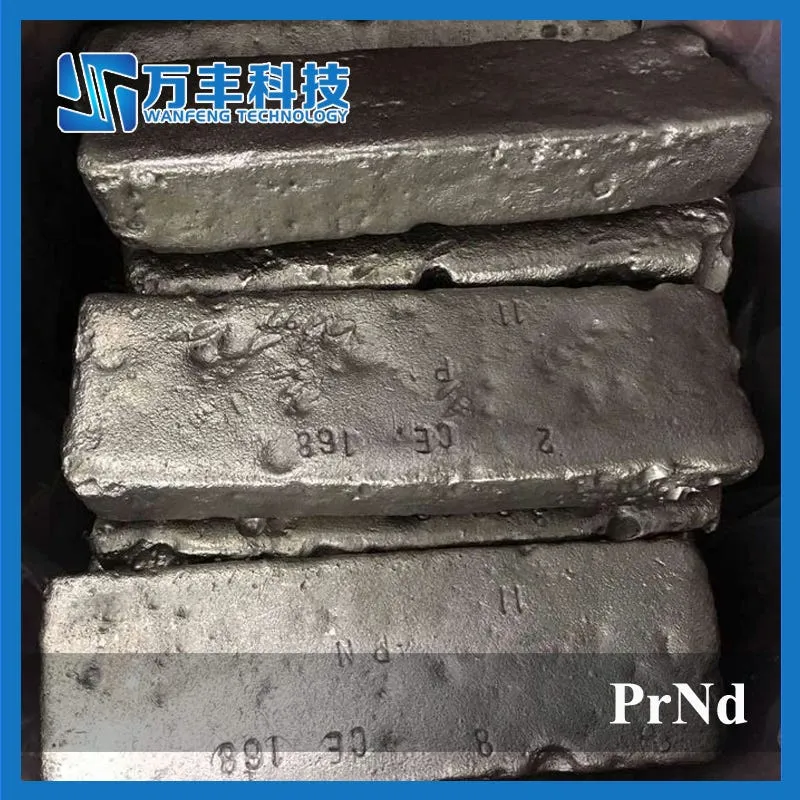
Alloying. The metals are combined with iron and boron — often with small amounts of dysprosium or terbium — to create the magnet alloy.
-
Melt spinning / strip casting / powdering. The alloy is melted, rapidly cooled into thin flakes or strips, then crushed into fine powder in a controlled atmosphere to prevent oxidation.
-
Magnetic alignment & sintering. The powder is aligned under a magnetic field, pressed into a dense compact, and sintered — heated just below melting point — to bond the particles.
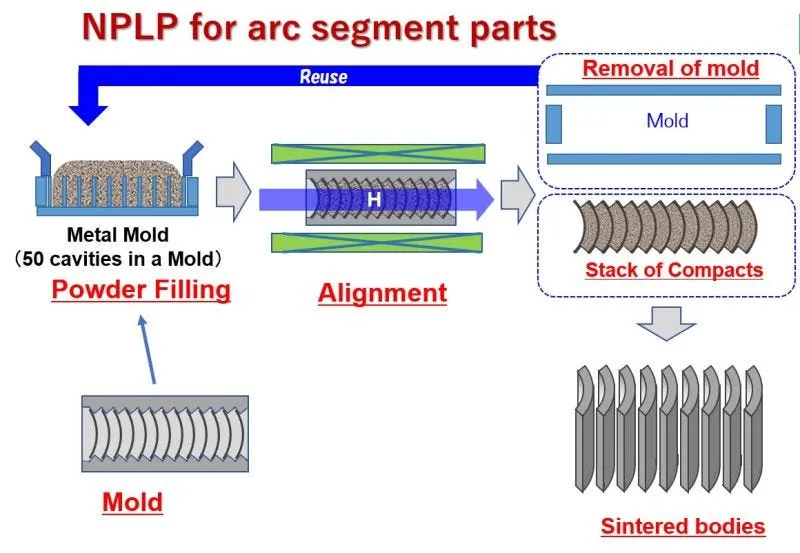 Image source: j-ndk.co.jp
-
Machining & coating. The sintered magnets are machined to final shape and coated — usually nickel or epoxy — against corrosion.
-
Magnetization. A powerful external field permanently magnetizes the component into a functional rare-earth magnet.
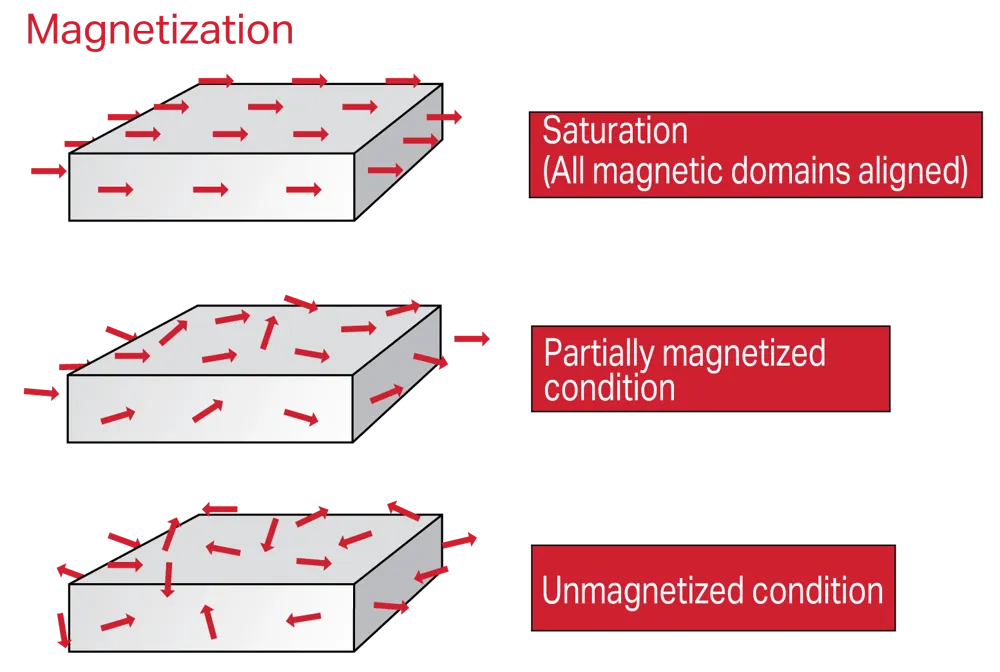
This full chain — mining to finished magnet — is dominated by China, which controls over 90% of global NdFeB production capacity.
Where India actually stands
Bluntly: India is practically at zero in rare-earth permanent magnets — especially the type used in EVs and other high-growth industries.
The only notable facility is a government-owned IREL (India) Ltd. plant in Visakhapatnam, operational since May 2023. It produces just ~3 metric tonnes per year of Samarium-Cobalt magnets, reserved primarily for defense.
The broader industry — automobiles, wind turbines, electronics, consumer tech — runs on Neodymium-based (NdFeB) magnets. India currently has no commercially viable NdFeB manufacturing capacity.
IREL does process rare-earth oxides and carbonates — lanthanum oxide, cerium oxide, praseodymium-neodymium oxide, samarium, gadolinium, yttrium, and small amounts of dysprosium — but that covers only step 1 of the seven-step chain above. The crucial downstream steps — metal reduction, alloying, sintering, coating, magnetization — are missing.
A few private companies like Permanent Magnets Ltd. have expressed interest in NdFeB facilities, seeing the strategic and commercial value. But even their most recent statements put commercial-scale production “several years away.”
In effect, India currently has no domestic ability to replace imported neodymium magnets — leaving the country exposed to exactly the shock it’s facing now.
Short-term: negotiation and diplomacy
Recent weeks of interviews with industry experts, startup founders, auto CEOs, and government representatives all point one way:
Diplomacy with China is India’s only immediate hope for resolving the magnet crunch.
China’s recent approval of export licenses for select U.S. and EU companies offers a glimmer — unless China chooses to make an example of India over recent geopolitical friction.
If diplomacy fails, the industry faces two unattractive stopgaps:
- Sourcing from other countries — theoretically possible, practically not, when China controls 90%+ of production.
- Setting up ancillary assembly in China — manufacturing motors and components inside China with locally sourced magnets, then importing finished goods into India. Logistically complex, strategically vulnerable, but a stopgap.
Neither path is good. Which is exactly why voices like Rajiv Bajaj and CRISIL warn that without a quick resolution, India’s auto industry could grind to a halt.
Long-term: building domestic muscle
Here’s the absurdity: India imported over 80% of its 540 tonnes of rare-earth magnets from China last fiscal year at a cost of just ~₹350 crore — less than 5% of an EV’s production cost. This tiny component has become a massive bottleneck for an industry worth billions.
In the long run, India has no choice but to make its own magnets. And the fundamentals are favorable:
- India holds the world’s third-largest rare-earth reserves — a solid raw-material base.
- The technology is not out of reach — India already makes SmCo magnets, and several Indian companies are reportedly in talks with Japanese firms for NdFeB joint ventures.
The real barriers are financing and time.
The government is exploring a PLI-style scheme to offset the cost disadvantage versus China. Since total imports run only ₹300–400 crore, the fiscal cost of such incentives would be minimal — and strategically vital.
Even fast-tracked, full-stack magnet capability will take years. But if this crisis has made one thing crystal clear, it’s this:
India can no longer afford to depend on a single country for so critical a material.
The course correction has begun — albeit under pressure.
First published on Seeker Capital’s Substack.